 The Decision Lab
Most HR teams have never worked with data this good.
The Decision Lab is an immersive experience for anyone who wants to lead with people data. Your team picks one of three industries, each with its unique challenges, and explores insights from hyper realistic workforce and business data in order to answer a strategic question. A hands-on experience where nobody needs to be an analyst, leaving you ready to bring people data problem-solving into a business or finance conversation.
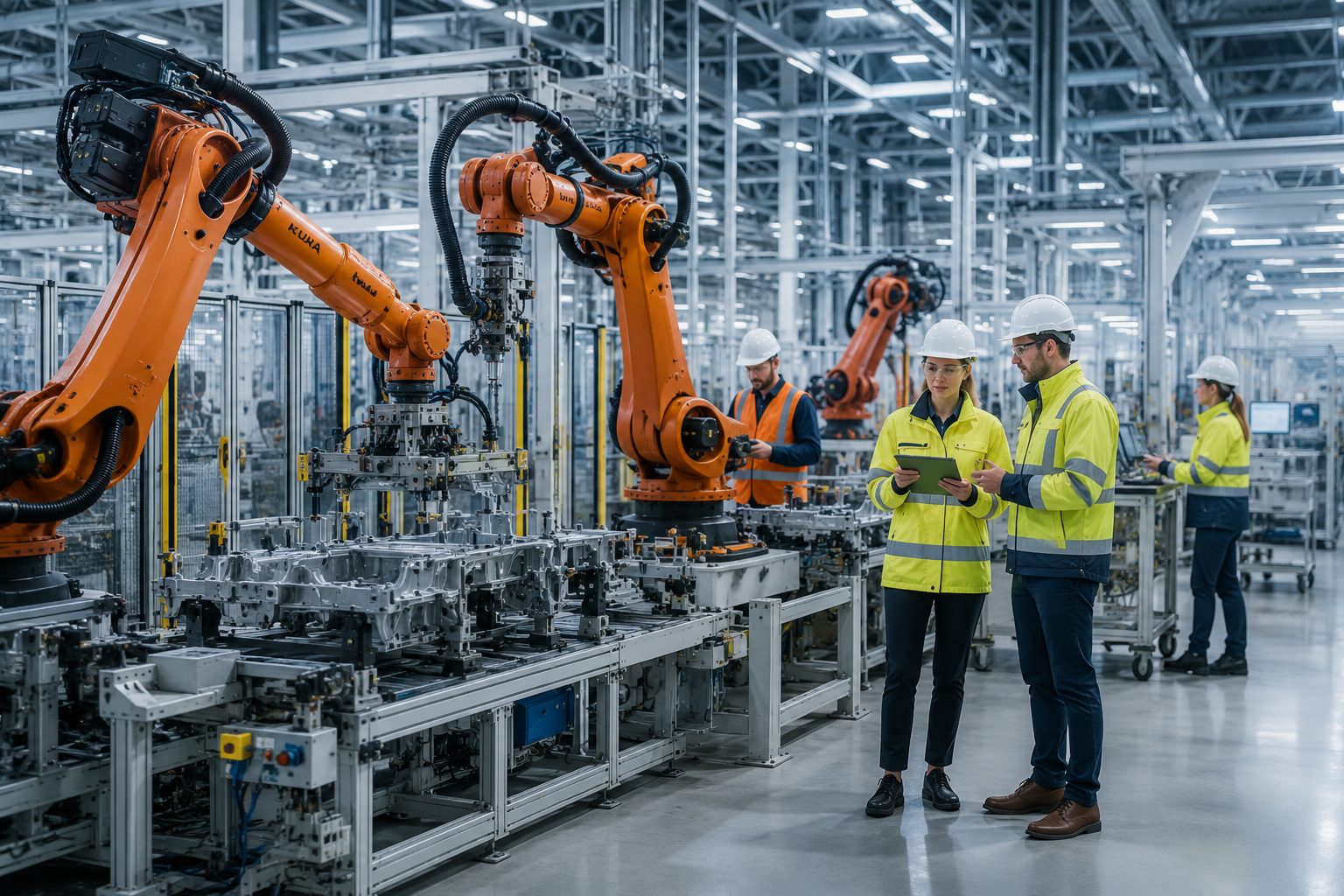
Crunchr Manufacturing
A third of the line supervisors can retire within four years. Overtime is climbing, safety incidents track with it, and nobody has named a successor for any of them.
- Headcount
- 4,180
- Sites
- 11 plants
- Median tenure
- 9.4 years

Crunchr Technology
Three years of fast hiring pulled engineering pay out of line. The people leaving are the ones a competitor is calling, and there are now more managers than the work needs.
- Headcount
- 2,640
- Sites
- 5 hubs
- Median tenure
- 2.1 years

Crunchr Health
Agency spend has doubled in two years. Sickness and turnover run highest on exactly the wards that lean on agency most, and nights are still short-staffed.
- Headcount
- 5,900
- Sites
- 14 sites
- Median tenure
- 6.8 years
Experience realistic data.
By the end of the session, attendees go from not being a numbers person to presenting insights and leading the decision.
The dataset is complete and joined up. Five years of workforce and business history, every system connected, and you can ask Crunchr AI questions in plain language or go deep on the advanced analytics. Most people have never worked with data like this, and it takes about twenty minutes to get comfortable with it.
Built around strategic questions.
The session is designed to make the connection between a strategic business challenge and the people data that can help you answer it. Each group takes a different question, so between them they cover the whole company.
How do we out-pace a faster competitor?
A rival is winning deals on speed and the sales numbers are falling. Behind that sits a workforce stretched thin, slow to get new people productive, and losing the exact people the rival is hiring.
How do we grow without growing the cost base?
Fifteen percent more revenue next year on the same cost base. That only works if output per person rises, which puts the gap between top and average performers on the table. How can we save cost here, to reinvest in growth there.
How do we enter three new countries?
Eighteen months to support the business grow in three new countries. Capability has to be hired, moved or built, and the teams you take the experts from still have to deliver.
How do we deliver the plan through a leadership handover?
A third of the senior bench turns over inside the plan period. The named successors have never been tested, and the pipeline behind them is thinner than anyone admits.

We have run this Workforce Strategy & Analytics Simulation Experience with Crunchr at NYU for six years and it is still the session students talk about afterwards. It puts business data and financials at the center of HR strategy, which is exactly where our graduates will need them.
 Anna A. Tavis, Ph.D.New York University
How the session runs.
The session culminates in a short presentation from each group back to the room. It can run as a standalone afternoon, a slot in a leadership week, or a fixed session in a university module.
Introduction to the Experience
The case, and a live walk through the environment.
Executive update Optional
Where AI and people analytics have actually got to, and what is changing for HR right now.
The simulation
Groups of three or four, a question each, facilitators helping whenever you get stuck. This is the part that runs over.
Break
Slides go in. Where there is a jury, they pick who presents.
Presentations
Five minutes to present, five to defend it. Three slides maximum.
Close
Certificates, and a prize for the sharpest read of the room.
Available in different formats.
For universities
Built on published workforce research, so a session can be shaped around what you already teach.
- One session, or a series across a term
- Certificate of participation for students
- Run with RSM Rotterdam and NYU New York
- No fee for accredited programmes
For companies
For HR teams, business partners and the leaders they support, all in one room together.
- Excellent for leadership offsites
- Pick the scenario closest to your sector
- We travel to you, you provide the room
- Mutual NDA if you want one
For your community
An open session hosted at a member company, with mixed tables from across the group.
- Twenty to twenty-five people works best
- Host company provides the space
- We bring facilitators and materials
- Free to attend
Questions we get asked.
If yours is not here, put it in the form and we will answer it directly.
- Length
- 2.5 hours
- Group size
- Up to 25 people
- Tables
- Groups of 3 to 4
- Joining
- Come alone or bring a team
- Preparation
- None
Do we need any data or analytics experience?
No. The session is built for people who make decisions about people and do not think of themselves as analysts. There is no training beforehand and nothing to install. You ask questions in plain language and the environment answers them.
Is any of our own data used?
No. Manufacturing, Technology and Health are fictional companies. The data is synthetic but built to behave like the real thing, workforce and business alike, which means the patterns are there to be found and some of it is deliberately messy. Nothing from your organisation is uploaded or touched.
What do you provide?
The scenario and its full dataset, with five years of workforce and business history. A personal login for every participant, live from a week before until the day after. One or two Crunchr facilitators working with the groups throughout. And the kit: case brief, slide template, certificates and a prize for the winning table.
What do we need to provide?
A room with space for groups of three or four, a screen, and wifi that holds up. One laptop per person, not one per group. And first name, last name and email for everyone taking part, three weeks ahead, so the logins are ready on the day.
How many people can take part?
Twenty-five is the maximum. People work in groups of three or four, and six or seven groups is the most a room can hear present in the time. Eight is a comfortable minimum. Larger cohorts run as two sessions rather than one big one.
Can I join on my own?
Yes. You do not need to bring a team. Pick the solo option in the form and we will place you in the next session that fits, or tell us your city and we will let you know when one is running nearby.
How far in advance do we need to book?
Three weeks is the minimum. Most of that is lead time on the participant list, since every login is created and tested before the day.
What does it cost?
Nothing for accredited university programmes or community sessions. For organisations it depends on the format and where you are, so tell us what you have in mind and we will come back with a straight answer.
Request more information.
Bring a team, come on your own, or tell us where you are and we will let you know when a session is running nearby. We reply within two working days.
Goes to [email protected]. We use it to plan the session and nothing else.